How Your Role Shapes Your Decisions
By Rosie Santos
10-minute read
Have you ever noticed how different people can look at the same situation and see completely different problems? A financial officer sees budget constraints. A program director sees mission impact. A longtime team member sees threats to cherished traditions.
This isn't just about perspective—it's about something deeper: how our roles fundamentally shape what we think is the "right" decision.
The Hidden Force Behind Your Choices
Most of us like to think we make decisions by weighing options and choosing what's best. But research suggests something different is happening. When facing complex situations, we're answering three questions—usually without realizing it:
Who am I? (What's my role, my identity in this situation?)
What kind of situation is this? (How do I interpret what's happening?)
What does someone like me do in a situation like this? (What's the appropriate action?)
This is what sociologists call the Logic of Appropriateness, and it explains why smart, well-intentioned people can disagree so profoundly about the right path forward.
Here's the catch: we often jump straight to question three without realizing that people have answered questions one and two differently. When stakeholders clash, it's rarely because they're being unreasonable—it's because they're starting from fundamentally different answers to "Who am I?" and "What kind of situation is this?"
Why Your "Frame" Matters More Than You Think
Here's where it gets interesting. Not only do our roles shape our decisions, but the mental frame we use to view a problem determines which solutions we even consider.
A frame is your mental lens—the way you define what the problem actually is. And here's the thing: how you frame a problem often matters more than the problem itself.
Think about a struggling organization. Frame it as a "cost problem," and you'll cut expenses. Frame it as a "revenue problem," and you'll pursue growth. Frame it as a "mission alignment problem," and you'll restructure programs. Same situation, completely different solutions—all depending on the frame.
When Roles and Frames Collide
Consider, for example, a nonprofit organization considering a major organizational restructure. Multiple stakeholder groups will be involved, and each will bring their own frame shaped by their role. What types of roles and frames might they bring to the situation? How might they respond to the Logic of Appropriateness prompts?
The governing board might answer:
Who am I? A fiduciary steward, responsible for the organization's survival
What kind of situation is this? A sustainability crisis requiring careful risk management
What does someone like me do? Protect the organization's future through cautious, structure-focused decisions
Longtime community members might answer:
Who am I? Organizational historians and guardians of institutional memory
What kind of situation is this? A moment when foundational values might be abandoned
What does someone like me do? Preserve what's worked and resist changes that challenge proven practices
Program leaders might answer:
Who am I? Both mission-driven practitioners AND people whose livelihoods depend on current programs
What kind of situation is this? Both an opportunity to strengthen impact AND a personal threat
What does someone like me do? Advocate for program continuity (while genuinely caring about mission)
A donor group might answer:
Who am I? We've evolved from a social network to a funding source—maybe now decision-makers?
What kind of situation is this? An opportunity to translate our financial support into organizational influence
What does someone like me do? Expect a seat at the table
Each answer is logical from its unique perspective; however, assumptions of how people see themselves and the situation can lead to misunderstandings. We’ve encountered this reality in our work, and find, we can’t understand why our "reasonable" proposals kept hitting resistance.
Breaking Free: Practical Strategies
Stop assuming you know how others answered questions one and two. My breakthrough came when we stopped trying to convince people our solution was right and started asking them directly about their answers to the foundational questions.
Recognize your own frame blindness. My initial approach was to ask, "How do we incorporate all stakeholder perspectives?" This assumed consensus was possible, and all views deserved equal weight. But reframing to "What structure best serves the mission and sustainability?" cut through the noise and clarified what mattered.
Name your role conflicts openly. We wear two hats—neutral consultant and executive decision-maker. These roles called for different "appropriate" behaviors. Acknowledging this tension, rather than pretending it didn't exist, helps everyone understand our decisions.
What This Means for You
Whether you're navigating organizational change, career transitions, or personal decisions, these insights apply:
Don't skip the first two questions. When you're facing a decision, pause and explicitly answer:
Who am I in this situation? (Not just your title, but your actual identity—expert, learner, protector, innovator?)
What kind of situation is this? (Crisis, opportunity, transition, test, natural evolution?)
Then: What does someone like me do in a situation like this?
Assume you don't know how others answered questions one and two. When stakeholders disagree with you, resist the urge to jump to "they're being unreasonable" or "they just don't get it." Instead, get curious:
"How do you see your role in this?"
"When you look at what's happening, what kind of situation do you see?"
"Given how you're thinking about this, what feels like the right move?"
Check your frame. Is the way you're defining the problem helping you solve it? Look for warning signs: poor results despite good effort, communication breakdowns, or a nagging sense that something's off.
Experiment with reframing. What if this isn't a conflict to resolve but a tension to manage? What if this isn't a problem to fix but an opportunity to explore? What if this isn't about choosing between options but creating a new alternative?
The Real Work
Effective decision-making isn't just about gathering information and making choices. It's about developing awareness of the invisible forces shaping those choices—the roles we inhabit and the frames we unconsciously adopt.
The next time you're stuck on a difficult decision, don't just ask "What should I decide?" Ask:
How am I framing this situation?
What role am I assuming?
What would change if I tried a different frame?
What would someone with a different role identity see that I'm missing?
Sometimes the path forward isn't about making a better decision within your current frame. It's about stepping back and questioning the frame itself.
That's where real change becomes possible.
Perspective Guides accompanies individuals and organizations through profound moments of change. Our work is grounded in rest, connection, and the belief that transformation is a collective endeavor. Learn more about our strategic services and coaching offerings.
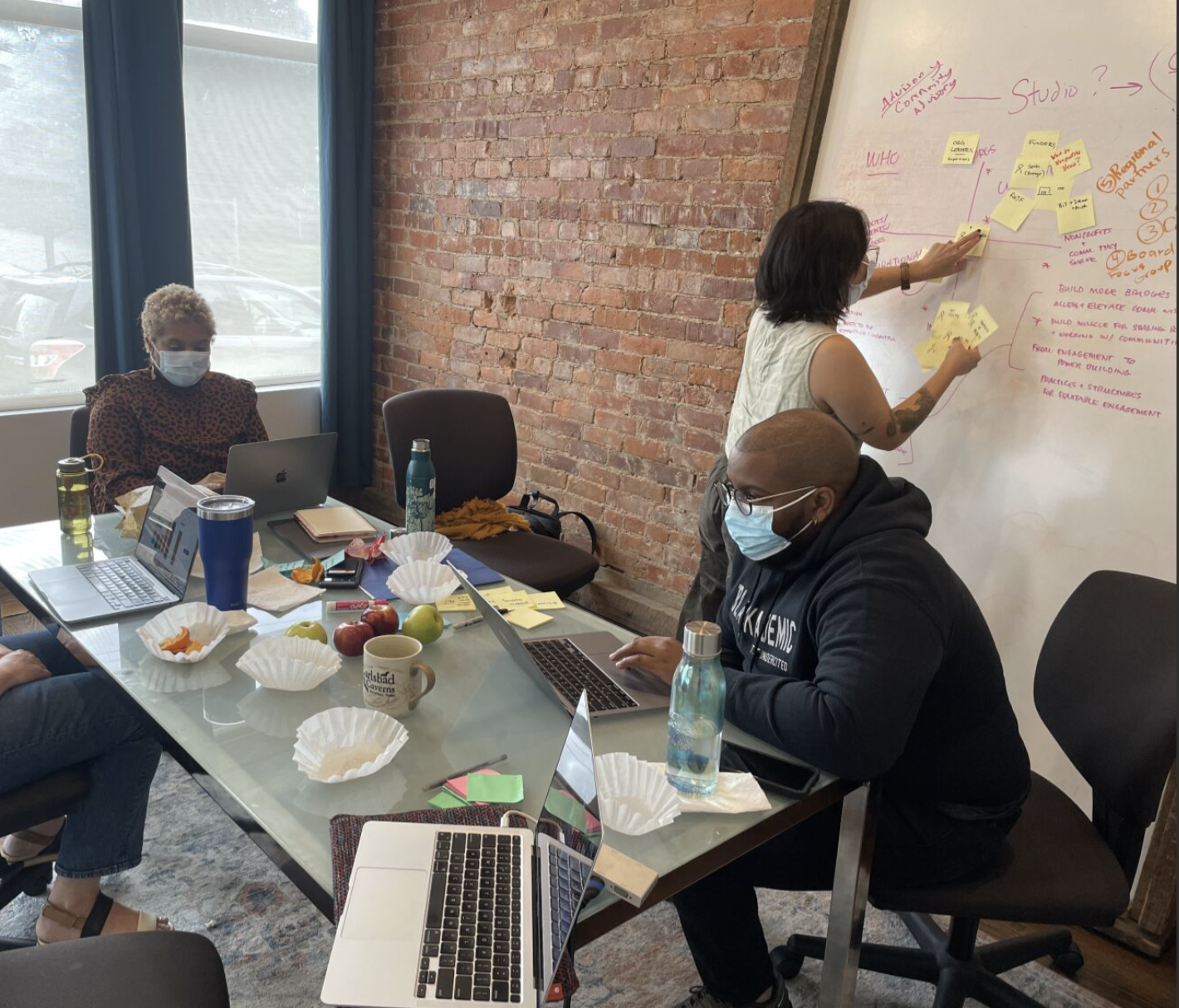
Client program design charrette.